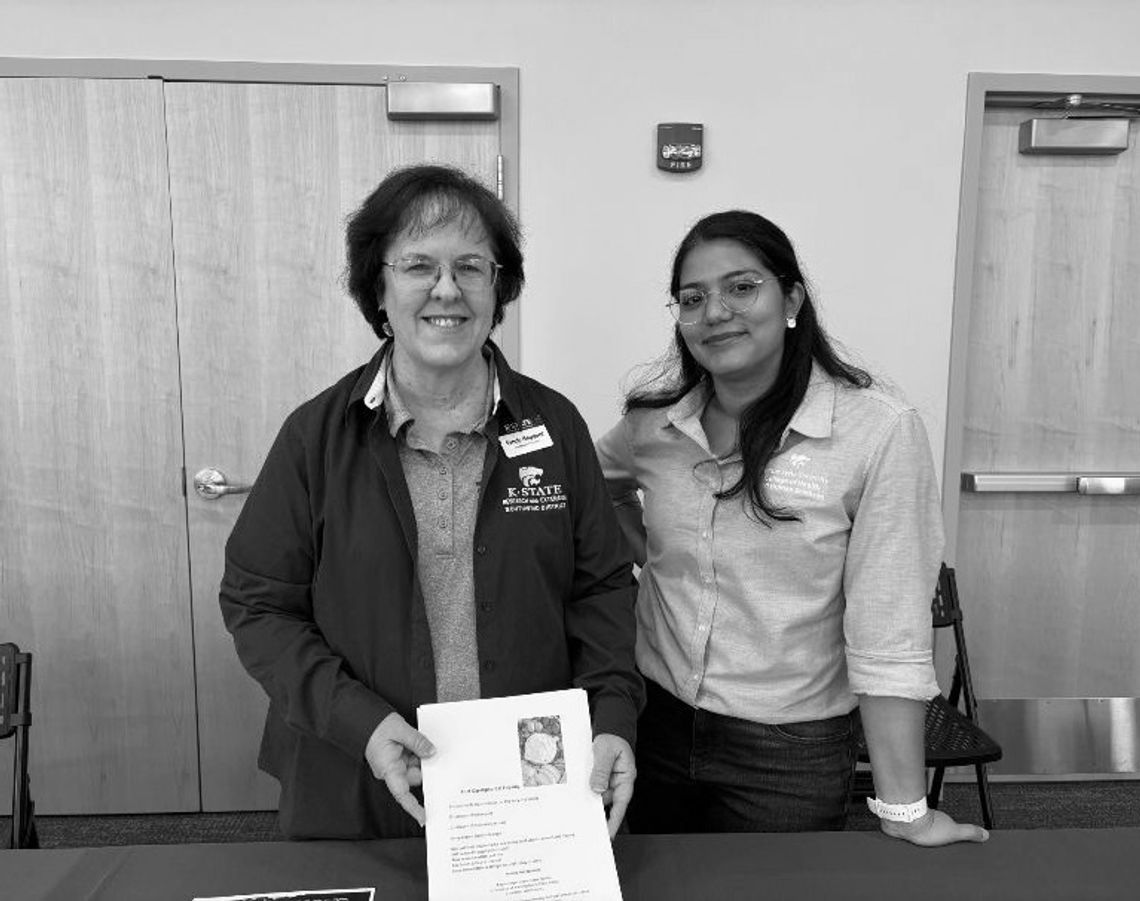
Sandy Haggard
Nearly 40 residents gathered at the NMRMC SEK Impact Center for a free educational program on Alpha-Gal Syndrome or AGS, hosted by Neosho Memorial Regional Medical Center in partnership with K-State Research and Extension, Southwind District. The event offered practical strategies and resources for individuals living with AGS, a condition triggered by sensitivity to mammal-derived products.
The session, “Managing Alpha-Gal Syndrome: Nutrition Strategies for Better Quality of Life,” featured keynote speaker Dr. Priscilla Brenes, Nutrition and Wellness Specialist at Kansas State University. Brenes emphasized that while there is currently no cure for AGS, patients can reduce symptoms by carefully avoiding foods and products that may cause reactions.
According to the CDC, nearly 450,000 Americans are affected by AGS, though the actual number may be higher since many states, including Kansas, do not require reporting. Patients are encouraged to self-report to the CDC to help improve awareness and data collection. Brenes and her team surveyed 30 AGS patients in Kansas, uncovering the challenges of daily life with the condition. One participant recalled breaking down in tears during her first grocery trip after diagnosis, overwhelmed by uncertainty about what foods were safe. Another shared that over time, he built a diet centered on chicken, turkey, plant-based butter, and almond milk — always checking ingredient labels before consuming any product.
Beckie Manahan, Physician Assistant at NMRMC, spoke about her family’s personal experience with AGS and explained the hospital’s approach to supporting patients.
Diagnosis typically begins with a Serum IgE test for Alpha-Gal sugars, normal levels are less than 0.1; followed by skin or allergy testing if needed. Once diagnosed, patients receive educational materials and consultations with medical staff to help manage the condition.
Manahan cautioned that AGS patients must avoid hidden sources of mammal-derived ingredients, including whey, casein, tallow, gelatin, lard, certain sugars, and even everyday items such as soaps, shampoos, lotions, lanolin, and leather. “Even fast food fries may have been soaked in beef broth — it’s not just potatoes and oil,” she noted. NMRMC offers patients an AGS-friendly menu created by dietary staff. NMRMC is among the few hospitals offering an AGS-friendly menu.
Attendees enjoyed an Alpha-Gal-friendly meal prepared by Erie-based Cosby’s Elevated Eats, featuring pulled chicken, non-dairy fruit dip, chicken with plant-based ranch dip, Oreo balls, and non-dairy cookies.
Symptoms of AGS may appear after consuming red meat or exposure to mammal-
derived products, including
items like leather boots. Reactions can range from hives, nausea, and indigestion to severe stomach pain, diarrhea, cough, shortness of breath, low blood pressure, swelling of the lips or throat, and dizziness.
For those who suspect they are experiencing AGS symptoms, they should contact their medical provider for an evaluation. For general information about Alpha-Gal Syndrome, contact Sandy Haggard , Southwind Extension, Nutrition, Food Safety, and Health Agent, at SJHaggard@ksu. edu or 620-365-2242. Additional resources are available on the Kansas State University Alpha-Gal information page.