YATES CENTER — Human trafficking and online sexual exploitation are not distant crimes confined to other countries or big cities — they are happening in everyday homes and communities across Kansas.
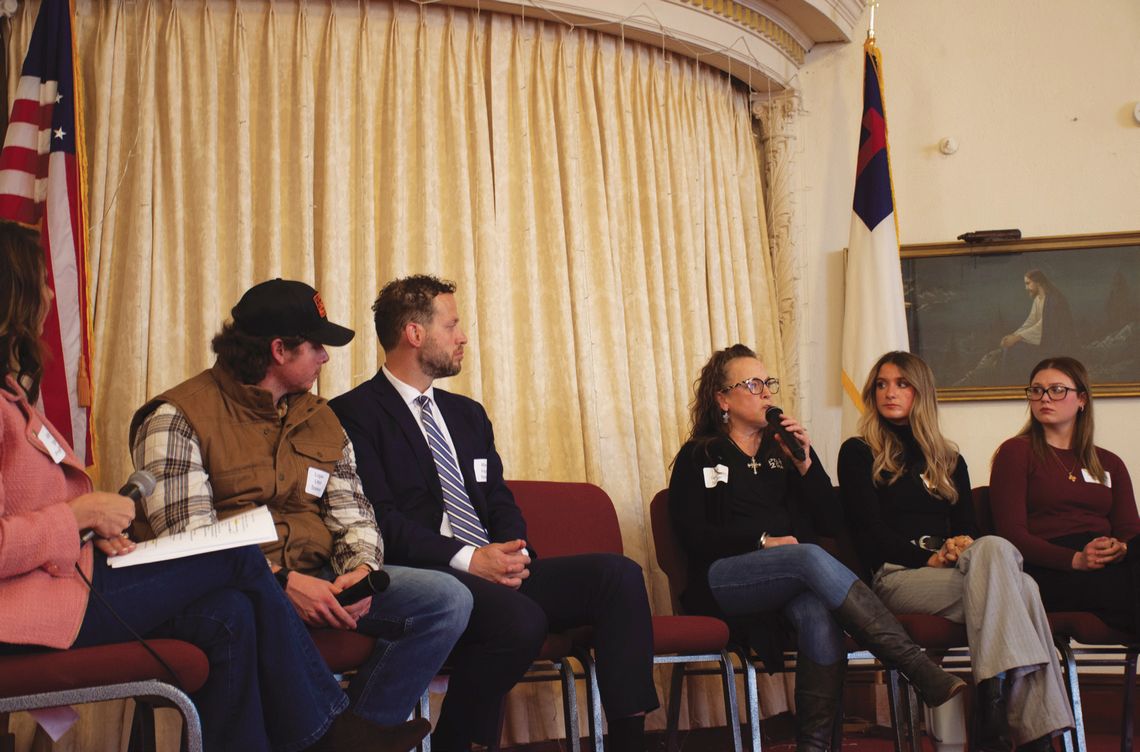
An event, organized by Project 2 Restore, brought together law enforcement officials, prosecutors, technology experts, and survivor advocates to discuss how trafficking operates, who is most vulnerable, and what communities can do to intervene.
“Crimes may be global in scope, but the harm is always local,” said Angela Boles, the founder of Project 2 Restore, who moderated the panel. Speakers emphasized that traffickers often operate across state lines or internationally, while exploiting victims close to home.
Project 2 Restore, based in Topeka, operates a residential rehabilitation home for adult survivors of sex trafficking. Boles said the idea grew out of her experience attending a similar event in 2017.
“It broke my heart,” Bowles said. “Over the next five years, that vision grew until we opened a home for survivors. Just being here today speaks volumes — awareness is how we end this crime.”
Panelists pushed back on common misconceptions, noting that trafficking rarely resembles scenes portrayed in movies.
“It doesn’t usually look like a creepy guy in a van,” said Logan Littel, a technology professional formerly with the Kansas Highway Patrol who works with law enforcement on human trafficking investigations. “By and large, it’s exploitation by people the victim knows — family members, romantic partners, and trusted leaders.”
Tina Spencer, a case manager at Project 2 Restore and a survivor of trafficking, described familial trafficking as one of the most common and overlooked forms.
“When abuse happens at home, it sets a child up to be vulnerable,” Spencer said. “It hits much closer to home than people realize.”
Mike Kagay, Shawnee County district attorney, explained the legal distinction between prostitution and human trafficking.
“Human trafficking includes force, fraud, or coercion,” Kagay said. “You don’t know someone’s story just by seeing them on a street corner. You don’t know who controls them, where they sleep, or what threats they’re under.”
Several panelists stressed that runaways are among the most vulnerable populations.
Maggie Spencer, Kaw Valley Human Trafficking Task Force Coordinator, said traffickers often encounter runaway youth within 24 hours. Littel took issue with the common term runaway.
“When we label kids as ‘runaways,’ it sounds like a choice,” Littel said. “These are children. We should be asking what they’re running from.”
The discussion also focused on demand, the buyers who fuel trafficking. Kagay said proposed legislation would increase penalties for buying sex, particularly when trafficking is involved.
“If there were no buyers, there would be no market,” he said. “This is a 50-50 issue.”
House Bill 2347 would elevate buying sex from a misdemeanor to a felony in Kansas. The bill passed unanimously in the Senate previously but stalled in the House. Panelists encouraged attendees to contact legislators ahead of an upcoming vote.
Technology and pornography were repeatedly cited as accelerants of exploitation. Law enforcement officials described cases where online content directly fueled realworld abuse, including child sexual exploitation.
“What people see online doesn’t stay online,” Littel said. “It shapes behavior.”
Project 2 Restore serves women ages 18 to 32 in a twoyear residential program that includes mental health care, vocational training, and oneon- one support. Bowles said 86% of clients were trafficked by someone they knew, some as young as age 7.
“This is life-altering trauma,” she said. “But healing is possible with consistency, resolve, and a willingness to stand with survivors.”
Panelists closed with a call to action, urging community members to stay informed, watch for signs of exploitation, and get involved locally.
“Once you know, you can’t unknow it,” Littel said. “Find what you’re going to do — and go do it.”